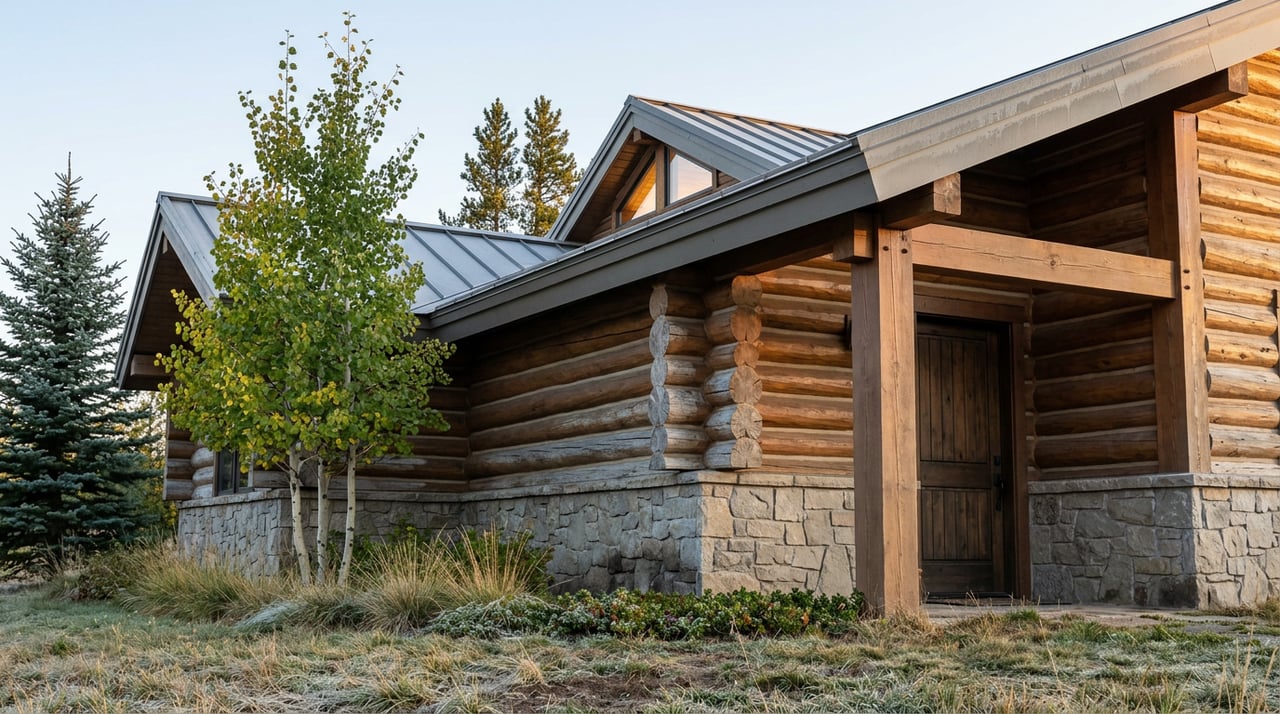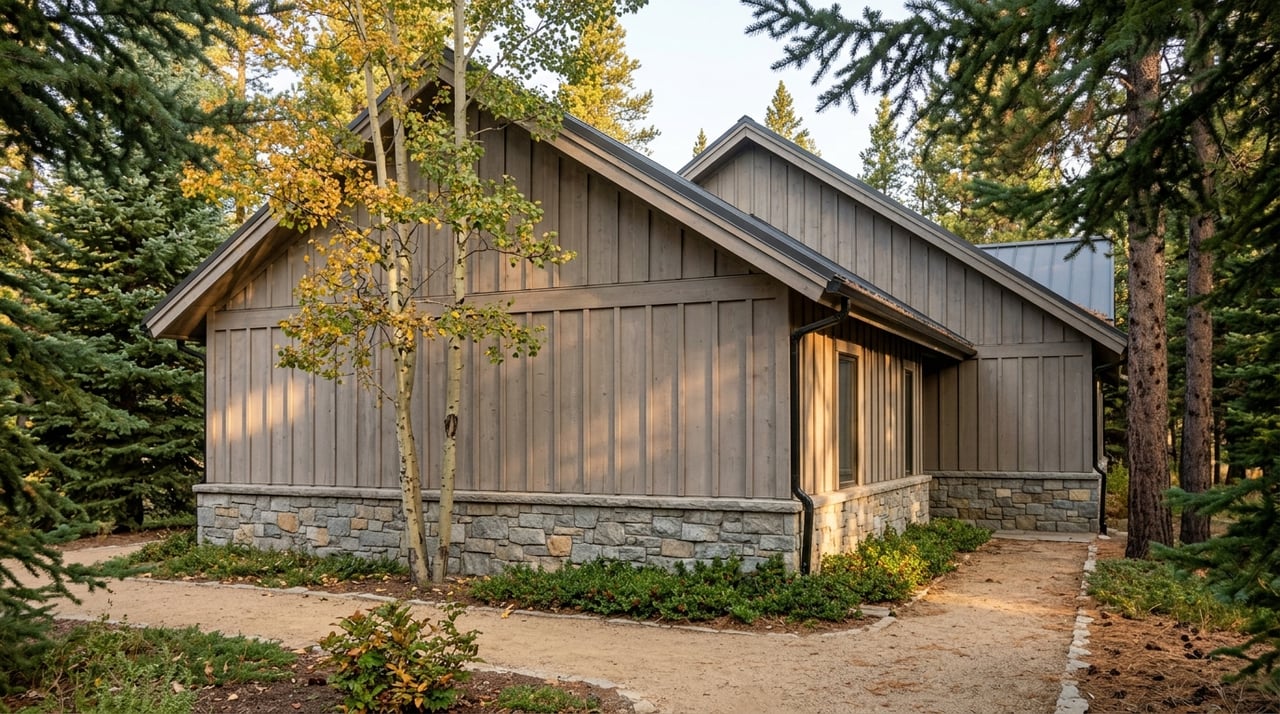
Picture two nearly identical three-bedroom condos, a five-minute walk apart. One sits inside Grand Elk, the golf course community the Town of Granby services with its own water and sewer lines. The other sits in Legacy Park, a subdivision close enough to see the same ski runs but legally outside town limits. Same square footage. Same view of Granby Ranch. Same buyer profile, probably a family looking to cover the mortgage with a few weeks of summer and winter bookings.
Their annual cost to operate legally as a short-term rental is not close.
The Grand Elk unit falls under the Town of Granby's short-term rental permit, which charges $728 per bedroom every year, plus a one-time $100 setup fee the first time around. The Legacy Park unit falls under Grand County's separate program, which charges $100 per maximum advertised occupant, capped at 16 people regardless of how many bedrooms the unit has. Run the math on that same three-bedroom layout and the town unit owes roughly $2,184 a year once it's past the first year. If the county unit is advertised to sleep eight, its owner owes $800. That gap, nearly triple, has nothing to do with rental income, HOA dues, or property tax. It comes entirely from which side of an invisible line the deed happens to fall on.
Same Town, Two Rulebooks
Grand County's short-term rental program was never meant to be one system. Winter Park, Fraser, Granby, and Grand Lake each run their own permitting process with their own fees, and the county's Department of Community Development handles everything outside those town boundaries. That's a normal setup for Colorado mountain communities, but Granby's version is worth slowing down on because the boundary line isn't obvious from the road.
The Town of Granby's own short-term rental page spells out the exception rather than the rule: it names Silversage, Legacy Park, Innsbruck, and Val-Moritz specifically as subdivisions that sit outside town limits, even though they read as Granby on a map, a mailing address, and a listing description. Meanwhile the town's water department page places Grand Elk and Granby Ranch inside the South Service Area the town runs directly. That's the kind of detail a buyer only learns by asking the town to check a zoning map parcel by parcel, which is exactly what the town recommends doing before you assume anything about which rulebook applies.
Here's how the two systems compare on paper:
| Town of Granby | Unincorporated Grand County | |
|---|---|---|
| Fee basis | Per bedroom | Per maximum advertised occupant |
| Current rate | $728 per bedroom annually, plus $100 one-time setup | $100 per occupant annually |
| Occupancy cap | Set by fire and building code, no flat number published | 16 occupants, hard ceiling |
| Who administers it | Town of Granby, via its Rentalscape portal | Grand County Department of Community Development |
| Fire inspection | Required, Grand Fire Protection District #1, includes Knox Box | Required, same district for county parcels |
The fire requirements are the one place both systems agree. Every short-term rental in Granby's service area, town or county, needs a Knox Box that lets Grand Fire Protection District #1 get inside during an emergency without breaking a door down. That part isn't optional and doesn't vary by which fee schedule you're under.
Where the $728 Number Came From
The per-bedroom fee isn't arbitrary, even though one owner called it exactly that at the meeting where the Granby Board of Trustees adopted it. The town commissioned a fee study from Economic and Planning Systems, a firm that specializes in real estate and land use economics, and the board approved the resulting rate at its October 10, 2023 meeting, effective January 1, 2024. The town projected the fee would generate close to $800,000 a year, money dedicated to workforce housing rather than the town's general fund.
That's worth sitting with for a second. Granby's short-term rental fee is not a licensing cost designed to cover the paperwork of processing a permit. It's a housing fund built on the logic that vacation rentals pull long-term housing stock out of circulation for the people who staff the restaurants, drive the plows, and teach at Granby Elementary, so the properties benefiting from tourism dollars help fund the housing those workers need. Grand County's occupancy-based fee, by comparison, is closer to a straightforward administrative charge. Neither approach is wrong. They're just answering different questions, which is exactly why they produce different numbers.
The Permit Doesn't Come With the Keys
Here's the part that catches buyers who assume they're purchasing a turnkey rental business along with the unit: a Granby short-term rental permit is issued to a specific owner, not to the property. It does not transfer at closing. The town's application checklist is direct about this, instructing applicants not to create a permit account while they're still under contract, because they aren't yet the legal owner. You wait until you've closed, then you apply fresh.
That means the seller's existing rental history, occupancy track record, and permit standing mean nothing to your application. If you're buying a Grand Elk condo specifically for its short-term rental income and closing in, say, November, you need to plan for a gap between closing day and the day your own permit clears, not assume you can list the property the morning after signing. The same logic applies on the county side. A permit tied to the previous owner expires with the sale, and the new owner starts the application over, this time under whichever fee schedule matches the parcel's actual jurisdiction.
Which Fee Structure Actually Rewards Your Floor Plan
This is the part that changes how a buyer should think about the choice, and it's the reason the fee comparison matters more than a simple "town costs more" headline suggests.
Granby's per-bedroom fee penalizes bedroom count directly. A five-bedroom lodge pays five times the base rate regardless of how many people actually stay there on a given weekend. A studio or one-bedroom unit that sleeps six via a loft and a pull-out couch pays for one bedroom while hosting a full family. If you're buying with rental income in mind and you're looking inside Granby town limits, the math favors compact, efficiently designed units over sprawling ones.
Grand County's per-occupant fee flips that logic. Bedroom count is irrelevant. What matters is the maximum occupancy you advertise, capped at 16 either way. A large home with generous bedrooms but a modest advertised sleeping capacity costs the same as a small one claiming the same number of guests. If you're comparing two properties in unincorporated county land, the fee doesn't care whether the square footage comes from four bedrooms or six, only from how many people you're telling booking platforms you'll host.
Put simply: the "cheaper" side of the line depends on what you're buying and how you plan to list it, not just which zip code it sits in. A buyer chasing a large family compound with modest advertised occupancy might do better financially outside town limits. A buyer eyeing an efficient, high-turnover studio or one-bedroom aimed at couples and small groups might find the in-town fee less painful than it first appears, since it's tied to bedrooms rather than beds.
Frequently Asked Questions
If I buy a property that already has a short-term rental permit, do I inherit it? No. Granby's permit is issued to the specific owner and does not transfer with the sale. You apply after closing, not before, and your application starts from zero regardless of the seller's rental history.
How do I find out for certain which side of the line a property is on? The Town of Granby publishes a zoning map specifically for this purpose, and it explicitly calls out Silversage, Legacy Park, Innsbruck, and Val-Moritz as outside town limits despite their proximity to downtown. Don't assume based on the listing address. Check the parcel directly, or have your agent confirm it before you write an offer if short-term rental income is part of your plan.
Does the fee change if I only rent long-term? The short-term rental fee structure applies specifically to rentals under 30 consecutive days. A lease longer than that removes the property from the short-term rental permitting requirement entirely, in both the town and the county systems.
If you're weighing a Granby purchase against its rental potential, the fee schedule is only one piece of the picture, but it's the piece that's easiest to get wrong before closing. Erin Life has spent years tracking exactly this kind of block-by-block detail across Grand County, from Grand Elk to Grand Lake, and can walk you through what a specific parcel actually owes before you're the one holding the permit. Start Your Grand County Search today.